

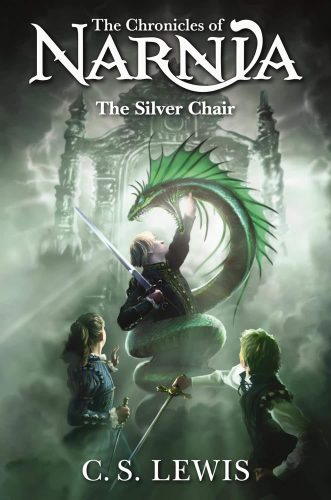
 “Aslan’s instructions always work; there are no exceptions.”
Author: C.S. Lewis
Eustace is comforting a crying girl at the school where they are both bullied when a headlong flight and a suddenly unlocked door lead them into a world of adventure. In this world, animals talk and princes are ensnared by evil witches and centaurs will take you home with ceremony – if you survive.
Jill and Eustace must take on a mission that leaves them face to face with some of their greatest fears – supernaturally tall cliffs, giants with a ken for human flesh, an underground world where the light never shines, a sorceress, and their own weaknesses and distractions. Along the way, they will have a glum traveling companion and enough temptations to almost permanently deviate them from the careful path set by Aslan. But, in the end, of course, Aslan is patient with the youngsters’ foibles, they ultimately give themselves to his instructions, and all’s well that ends well.
The Silver Chair is book four in the Narnia series, and another playful yet deeply insightful offering from Lewis. The original Penvensie children have moved on, their lessons taught, their objective ostensibly to seek Aslan by another name in their world, but Eustace, after having been caught in Edmund and Lucy’s adventure in The Voyage of the Dawn Treader, where his greed turns him into a dragon, is still ripe for Narnia.
Eustace, however, takes a second place in this narrative to the newly introduced Jill, who hasn’t encountered Narnia before and makes some rookie mistakes. Her introduction to Asalan is unforgettable, after her hubris sends Eustace over a cliff, leaving her alone and eventually so thirsty that she braves the lion that waits by a nearby stream. Here her lesson and adventure begins, and she alone receives the sacred set of instructions and the burden of remembering them – with predictable consequences.
Rejoined with Eustace, the pair manage to fail at three of the four instructions, and in a last-ditch effort to fulfill their mission – finding the missing Prince Rillian – they team up with a Marshwiggle, Puddleglum, to venture into the land of the giants where the stolen prince is said to be held captive.
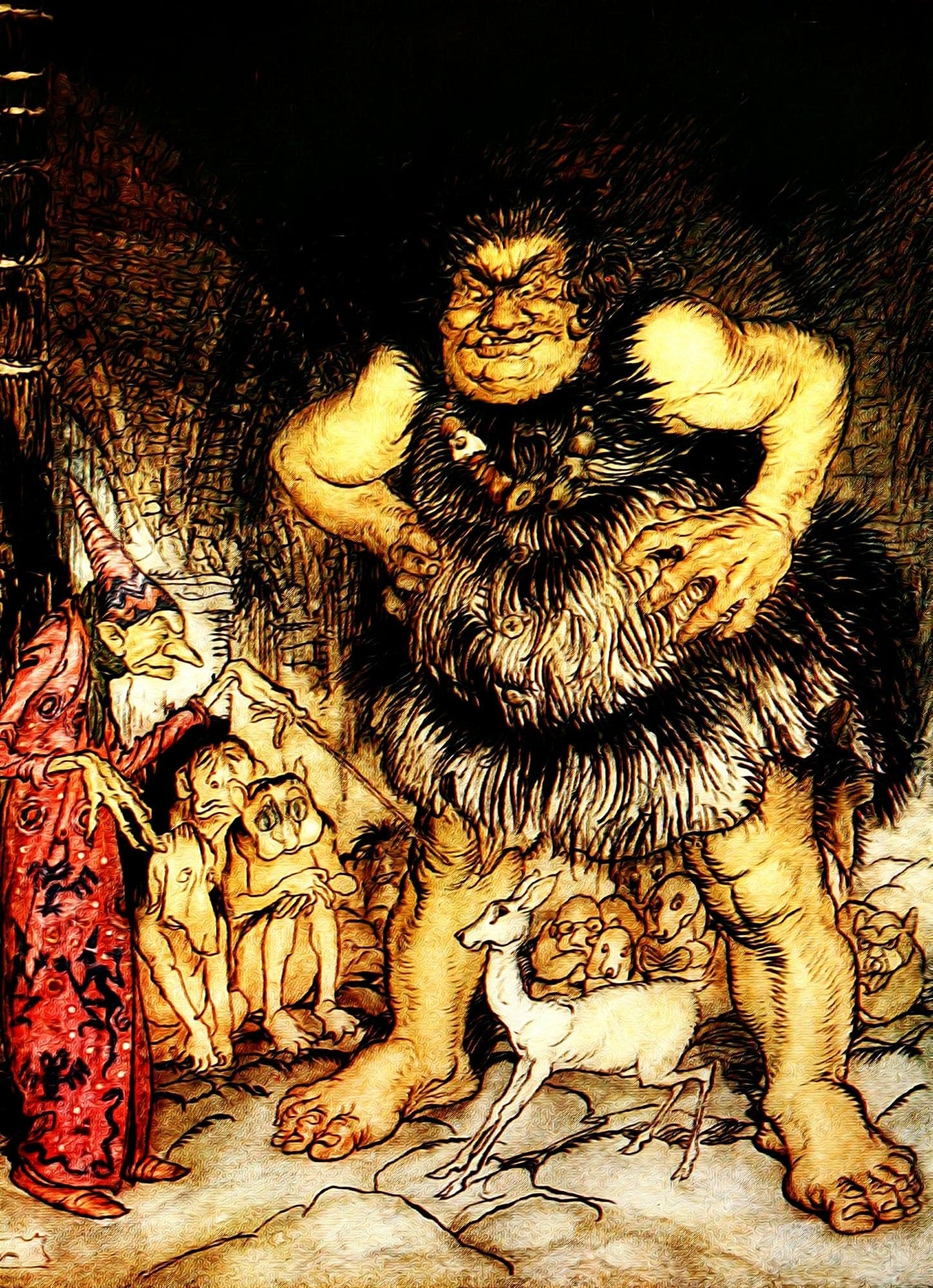
Thus begins one of the scarier and most impactful moments of the book, when the children’s desire for pleasure and an easy journey leads them into the giant’s royal castle and nearly into the cooking pot of said giants. After this mishap, the pair is then ushered into an unforgettable underground kingdom, where Lewis merges his theology with action and the two children plus guardian Marshwiggle face-off against the powerful witch and her convincing lie that everything above – the sun, the world, the Prince – are but a poor imitation of her kingdom, a figment of their imagination, a child’s dream.
“One word, Ma’am,” he said, coming back from the fire; limping, because of the pain. “One word. All you’ve been saying is quite right, I shouldn’t wonder. I’m a chap who always liked to know the worst and then put the best face I can on it. So I won’t deny any of what you said. But there’s one more thing to be said, even so. Suppose we have only dreamed, or made up, all those things-trees and grass and sun and moon and stars and Aslan himself. Suppose we have. Then all I can say is that, in that case, the made-up things seem a good deal more important than the real ones. Suppose this black pit of a kingdom of yours is the only world. Well, it strikes me as a pretty poor one. And that’s a funny thing, when you come to think of it. We’re just babies making up a game, if you’re right. But four babies playing a game can make a play-world which licks your real world hollow. That’s why I’m going to stand by the play world. I’m on Aslan’s side even if there isn’t any Aslan to lead it. I’m going to live as like a Narnian as I can even if there isn’t any Narnia. So, thanking you kindly for our supper, if these two gentlemen and the young lady are ready, we’re leaving your court at once and setting out in the dark to spend our lives looking for Overland. Not that our lives will be very long, I should think; but that’s a small loss if the world’s as dull a place as you say.”
The points are well made and hard hitting, but Lewis loves his levity as well. Puddleglum, the frog-like Marshwiggle who always sees the dark side of everything is a joyous and welcome relief, keeping us laughing even as we think. Of course, there is more to this Marshwiggle than meets the eye, and he too has his own transformative journey and moment of bravery.
All too soon, the adventure has ended, a somber note once again shrouding those who have entered Narnia and now must leave. We get a death, a resurrection, a promise of hope, and a return. Will Eustace and Jill sojourn in Narnia again? Hard to say, but their adventure will linger with us long after the page rattles closed. The horror of the cannibalistic giants, the humor of a Marshwiggle, the bravery and fears of children, and the ultimate confrontation edge into our minds and stay there. The places are real, and the meanings, even more so, the simple yet shocking revelations resonate on a level that a simple theological essay could never do. Highly recommended – life changing, imaginative, adventurous, humorous, and thrilling by turns. I am so glad that the C.S. Lewis fellowship program introduced me to Narnia and that it opens to me now, even as an adult.
– Frances Carden
Follow my reviews on Twitter at: https://twitter.com/xombie_mistress
Follow my reviews on Facebook at: https://www.facebook.com/FrancesReviews

- Book Vs Movie: The Shining - April 6, 2020
- Thankful For Great Cozy Mysteries - December 13, 2019
- Cozy Mysteries for a Perfect Fall - October 20, 2019