

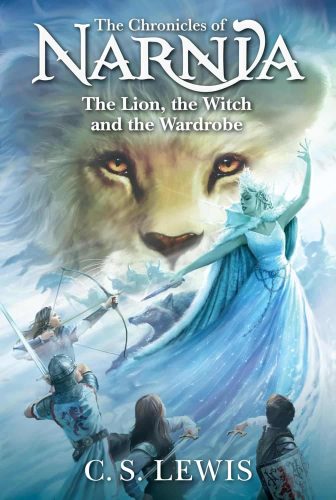
 “All shall be done, but it may be harder than you think.”
Author: C.S. Lewis
The world is at war, but for four English children, this is a distant reality. They’ve been sent from the bustle and danger of London to a professor’s remote country manor for safety. Here, their days are filled with exploration, and one rainy day in particular, the youngest, Lucy, makes a discovery that will change everything.
In this creaky English manor, there is a wardrobe filled with old furs, but it is no ordinary wardrobe. It leads to a magical world – one that is stuck in a land of Winter and no Christmas, ruled by a wicked witch. The children’s arrival in this realm is the catalyst of a great transformation and of the prophesied war between good and evil. In this world, called Narnia, the children face both plenty and strife, kindness and betrayal, goodness and selfishness, and the brave, beautiful lion, Aslan, who will lead this world of talking beasts and mythical creatures back into the sunshine of spring.
Now, I am very, very late to the game. I never read any of the Narnia books as a child, although I always meant to. As an adult, I decided to fix this, bought the series, and steadily let it gather dust on my groaning shelves. I spent two years in the C.S. Lewis’ Fellowship Program, which has Aslan as its logo, and read most (although not all) of Lewis’ theological works. Yet the Narnia books, embarrassingly, just kept gathering dust. I even, finally, watched the movie (at the behest of the C.S. Lewis Year 2 Fellows’ Program).
Now, finally, barreling toward middle age and grappling with that looming 4-0, I’ve read The Lion, the Witch, and the Wardrobe. And . . . I liked it.
The story is spare. Lewis is not lush with his description, although he peppers enough in there to capture this shimmering, cold world and its glorious transformation. Instead, he is straight to the point, fairy-tale fashion. Before we’re twenty pages in, the children have discovered a new realm and are in mortal danger. The action leads, and there is no wasted dialogue, no asides, nothing that doesn’t serve the arrival of Aslan, his sacrifice, and the final battle.
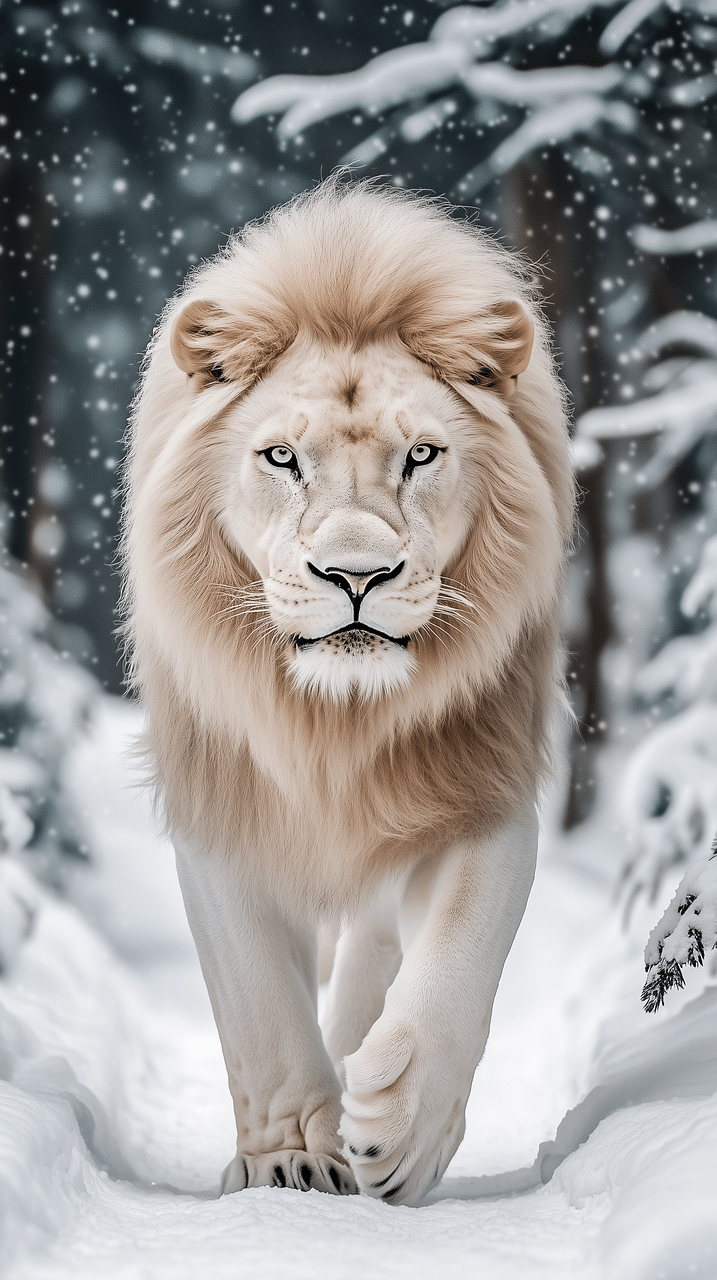
Image by Miroslav Surovčík from Pixabay
There are many essays out there where Lewis notes that truly conveying moral truth is best done through fiction. Read any of the various biographies about him and you’ll learn how his own journey towards faith began in the beauty of ancient mythology, especially anything concerned with the Norse gods. Art moved his soul far more than arguments, despite his strident attempt to be a factual atheist in his day-to-day life. But fiction stirred his soul, and in the fairy-tale he saw the true fruition of the power of storytelling not only to entertain, but to enlighten and transform.
The way that Aslan mirrors Christ is obvious. He sacrifices himself in a very moving and frankly horrific scene. He involves the children in their own salvation, as well as the creatures of Narnia, when he clearly had the power to do it all himself. He is a majestic creature that desires relationship, despite his boundless power and completeness in and of himself. He is a stern creature of love that also knows mercy and forgiveness. He is a beautiful lion . . . but he is no tame lion, and while his scenes here are brief, he leaves a lasting impression. Indeed, Lewis is more focused on the feeling of Aslan than even his words.
Similarly, the witch is delightfully and stupidly wicked. Her iniquity ruins her own cleverness, the craftiness of her own schemes, and we see how evil is a house divided and how her very cruelty harms her own plans. We also see how she tempts and then immediately turns, how the pleasure is soon dispelled to reveal the bloody barb on the lure, the captured soul both addicted and mourning.
The allegory is clear, yet simply enough for children to enjoy and follow without being aware of the mechanics. It’s not subtle, but it is still in service of a rollicking good story – plus we do get a faun (think of a Pan-like creature) and talking beavers who like beer, so honestly, what more do you want?
Along with the witch, we get some all too human villains. One of the children, the reprobate Edmund who we despise and yet, horrifyingly, identify with, is the catalyst for many dangerous moments for all the children and the realm of Narnia. Edmund is also the obvious stand-in for Adam, and the one whose redemption and ultimate reward hits hardest.
Lewis would be very pleased to note that his stories met their mark – children love them for the imagination, the battles, the highs and lows, and adults love them for this plus the message. It is a brief story, but one with resounding impact and soaring visuals. In many ways, it has the nature of a parable, breaking down what we already know (or should know) and showing it to us in a new light. Lewis succeeded with his fairytale, and it is both edifying and enjoyable. Onwards, finally, with the rest of the series!
– Frances Carden
Follow my reviews on Twitter at: https://twitter.com/xombie_mistress
Follow my reviews on Facebook at: https://www.facebook.com/FrancesReviews

- Book Vs Movie: The Shining - April 6, 2020
- Thankful For Great Cozy Mysteries - December 13, 2019
- Cozy Mysteries for a Perfect Fall - October 20, 2019