

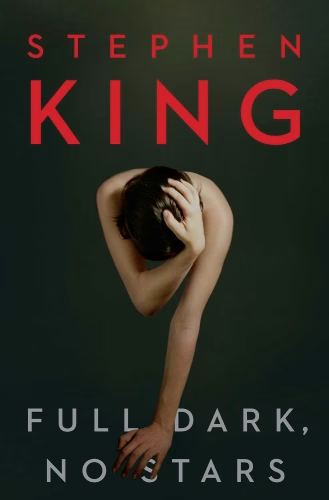
 “Monsters are real, and ghosts are real too. They live inside us, and sometimes, they win.”
Author: Stephen King
In his most brutal look at the desiccated heart of humanity to date, Full Dark, No Stars, Stephen King takes on the unspoken, unpalatable, and unimaginable in four grisly novellas: “1922,” “Big Driver,” “Fair Extension,” and “A Good Marriage.” Each story is its own world – a dark, fetid place of no hope and extreme actions. It’s classic King, but with a twist of remorseless hopelessness. Even for King, the subject matter is dark and the moral of the story inevitably bleak: abandon hope all ye who enter here.
It starts with “1922.” We have an unhappy marriage, a farmer, and his son. They are getting by as everyone always does, until the wife comes into a little money and decides that it’s time to sell the farm and move to the city. That’s when the farmer begins his plan and slowly, carefully, readies his son for an elaborate matricide.
“In the end we are all caught in devices of our own making.”
Of course, the best laid plans have their faults, and what the farmer promises his son is freedom is only the beginning of a long summer of hell that will have, shall we say, far reaching impacts?
“Monsters are real, and ghosts are real too. They live inside us, and sometimes, they win.”
In the end, we have images of a grisly well, a grinning corpse, and scurrying rats to cast judgement onto the guilty and to pin those who seek freedom to the everlasting nature of their guilt. It’s the imagery here, as well as the farmer’s placid, honest telling, the defeat in his words and the introspection that speaks of many hours in the dark, listening to scurrying in the walls, that leaves readers chilled. Furthermore, the setup and execution feels real, like something that could (and probably did) happen on an isolated farm somewhere, changing the life of a man and his boy forever. Perhaps getting away with a crime is worse than getting caught . . . at least when the boundaries between the living and the dead start to sway. . .
The next story, “Big Driver,” is concerned not with the downtrodden guilty, but with the blithely innocent. Tess Thorne is a moderately successful cozy mystery writer on her way home from a library event in Chicopee when a flat tire leaves her stranded near an abandoned gas station. When a friendly man in a pickup arrives shortly thereafter, her salvation soon turns into a waking nightmare of torture and rape. When she wakes up among corpses, she realizes that the man has done this before. Furthermore, he thinks he has finished the job. But she is alive, and that has implications.
As an unending night of just trying to survive leaves her traumatized, Tess weighs her options. Does she want to forever be known as the victim? How embarrassing to be so branded. What if people think it was her own fault? What if the killer comes back to finish the job? But what of the corpses in the culvert? What action do they require – and is she really equal to the task?
At turns grisly and empowering, “Big Driver” is an emotional gut-punch chronicling a woman’s worst nightmare and a revenge story gone oh so right.
Image by creatifrankenstein from Pixabay
We pause in the middle of the worst aspects of humanity for another pseudo-revenge themed narrative, but this time, the seeker is hardly an innocent. In “Fair Extension” a man secretly hates his best friend. The guy has taken everything from him (his first girlfriend, for instance) and he always seems to just be doing better. And now, the man has cancer while the friend is in the best part of his life. But what if there was a strange roadside merchant who offered a delicious deal? What if everything bad set to happen to you were to happen to someone you really, truly hated? In this dark like gem, the theme is more quirky than introspective, and while its morbid and gives us a peek into an altogether too relatable part of the human heart that we would have rather never seen, it’s almost light in comparison to the murder, haunting, rape, and revenge we’ve experienced so far.
And then, finally, “A Good Marriage.” One day, a woman knocks over a box in her husband’s garage only to discover that she has been happily married to a serial killer. But won’t everyone think she must have known – always known? They’ve been together for decades. How did she not know? How does she keep him from finding out what she does know, and what does she do next?
This is one of the cleverest pieces, and refreshingly, we are in the heart and mind of the innocent again, battling evil with unmitigated vengeance.
I’m generally a fan of longer works, but Stephen King hits the Goldilocks formula with each of these tales, and something about their brevity leaves the images and thoughts lingering longer after the pages rustle closed. It’s not for the faint of heart, but Full Dark, No Stars is unarguably some of King’s best work. It packs a set of teeth, and once it latches on it will leave you torn and raw, seeing into the deep, pustulant heart of the worst that humans are capable of and the extremes to which we sometimes must go. Highly recommended. I am forever haunted and significantly more afraid of other people now.
– Frances Carden
Follow my reviews on Twitter at: https://twitter.com/xombie_mistress
Follow my reviews on Facebook at: https://www.facebook.com/FrancesReviews

- Book Vs Movie: The Shining - April 6, 2020
- Thankful For Great Cozy Mysteries - December 13, 2019
- Cozy Mysteries for a Perfect Fall - October 20, 2019