


 Found Homes, Broken Families, and Love
Author: Marcia Willett
Moorgate is a cozy country mansion, overlooking the Moors. When you open the windows, you can hear the rooks babbling to one another. You can watch the grasses waving on the Moors, the distance hazy and purple. It’s a beauty that is sublime for its very harshness, its remoteness. Many people are in love with it, all for different reasons. But who will get this home with all its associated romance and heartache, and what must they go through to get it?
Lady Todhunter, Maudie, is forced to sell Moorgate, the family vacation home. She’s an elderly widow, on her own, and she needs the money. But this will devastate her step-granddaughter, Posie. And it will stoke the fires of hatred once again among her stepchildren, especially Selina, who has never forgiven Maudie for taking her mother’s place.
Among the potential buyers, there is Selina who is seeking to salvage what is left of her father’s memory; the contractor, Rob Abbot, who fell in love restoring the house; and Melissa Clayton, a young woman who found a second chance one borrowed week in winter.
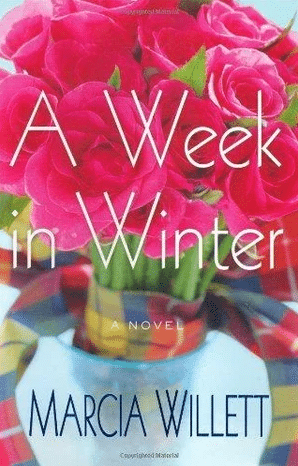
I bought this book many years ago, and I bought it for the cover. I finally decided to read it, not really knowing what it was about, only vaguely remembering that it wasn’t my genre, but it was in the Barnes and Noble remaindered bin, and that cover was worth the $5. I was pleasantly surprised at just how much I enjoyed A Week In Winter and how complete and enmeshing the atmosphere was, from the description of the house to the forlorn beauty of the moors, to the sublimity of just the right cup of tea.
The book is bisected among the characters, their stories all eventually intermeshing. The main theme, however, is love with a specific focus (justification?) on cheating. It’s meant to be a complex look at families and the heartaches and complications of life, but my enjoyment waned a bit towards the end with the constant seeming refrain of “if you’re cheated on, you probably deserved it.” I doubt that was the intent of the author, but it did sour the otherwise cozy atmosphere and bring down the sense of peaceful romance.
But, still, that atmosphere is so lovely and I was really drawn into the story and what happened amongst the characters, although I did not like or relate to all of them.
We have the Maudie story, for one. She is torn between her hatred of Selina and a strange empathy with her. She also grieves how Harold died, how he apologized again and again to Selina for the betrayal of remarrying. Maudie is a force to be reckoned with, a strong and likable character who mostly plays an observational role and is torn between her own desires, the unfairness of her treatment, and the knowledge that everything is complicated and that empathy should rule (at least somewhat). Maudie is the bookend of the narrative, the driving force that brings us back, again and again, and a lover of a good tweed and a perfect cup of tea. She also ends up with a giant dog named Polonius, which is basically literary perfection.

Image by Алена Шець from Pixabay
Next, we have Selina and her hen-pecked husband, Patrick. I was pretty into the drama of this story. Patrick has rebelled from a hate-filled Selina, finding comfort in the arms of another woman, and finding the courage to dismantle his sham of a life. This brings drama to the family and makes for some interesting situations and chapters. I didn’t care for the message here, a continual one of “Selina deserves it” and “if someone cheats, its because they weren’t happy in the relationship, which is the spouse’s fault,” which was said in the novel. Still, this portion of the story had the drama, and I was intrigued to see where it went.
Selina herself is a dull character, a cardboard Disney style villain, and her “transformation” in the ending is completely unwarranted. Normally, I would have felt some sympathy for a daughter who saw her father recover from his wife’s death and start dating within months and a wife who’s husband cheated, but Selina was too thoroughly crafted as a one-dimensional villain to elicit any sympathy, which is honestly unrealistic and a missed chance to add nuance to the story.
Then we have the Rob and Melissa story, which started later in the narrative. I didn’t care for this particular romance, which was, frankly, a little too melodramatic and namby-pamby. I can’t say too much, because I’ll give away the general gist of the story, because Rob and Melissa become incredibly important, especially to the dispensation of Moorgate. But honestly, I could have totally done without them.
Finally, there is Posy, the step-granddaughter, who provides insight for Maudie into the ramifications of a broken family, and also engages in her own last minute miracle romance. She is more on the outside of the story.
We end the story with a large confession which further draws everything together, cause and effect wise, solidifies the “if you were cheated on, you so deserved it,” and delivers some insta-romance alongside some tissue-inducing sadness. It left me conflicted, because I disagree strongly with the message that everyone who was ever cheated on deserved it or was a bad partner (who, therefore, deserved it). That is way too simplistic. And I also was not a fan of the entire Rob and Melissa story, but I did greatly enjoy the atmosphere and the way of telling and even some of the drama. All in all, I’m glad I read this and I had fun with it. I give it a 3.5 and think I will probably return to this author. At the least, this book will remain in my collection instead of going into my overflowing Little Free Library. I’m conflicted, but I still recommend A Week In Winter.
– Frances Carden
Follow my reviews on Twitter at: https://twitter.com/xombie_mistress
Follow my reviews on Facebook at: https://www.facebook.com/FrancesReviews

- Book Vs Movie: The Shining - April 6, 2020
- Thankful For Great Cozy Mysteries - December 13, 2019
- Cozy Mysteries for a Perfect Fall - October 20, 2019