


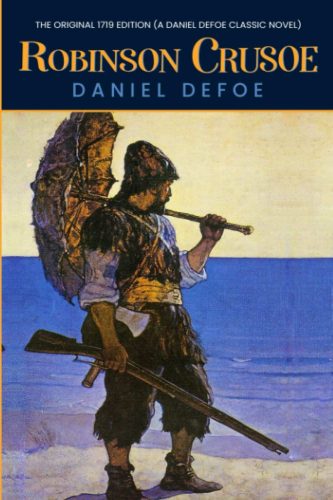
The Novel That Created The Castaway Story
Author: Daniel Defoe
The story of Robinson Crusoe is a cultural icon; many of us haven’t read the full book before, but we all know the premise: a young sailor survives a shipwreck only to be cast onto a desert island. Here, he is stranded and forced to live by his wits and wiles. This becomes more complicated when he discovers that his new island home is also the special feast location for several tribes of cannibals who row across the waters to host their deadly banquets.
I read Robinson Crusoe (proper title The Life and Most Surprising Adventures of Robinson Crusoe, of York, Mariner) when I was a child. I didn’t realize then that what I was reading was the child friendly, abridged version. What I did remember with absolute delight was the ingenuity of how Crusoe built homes in trees and caves, creating his “castle,” his deepening understanding of himself and God, and (my favorite) the cannibal feasts that turned the sands of the beach red. Yes, that was in the kid’s version (and perhaps explains my early love of horror). Some other way worse stuff wasn’t.
Since reading Robinson Crusoe as a child, I’ve fallen in love with the cast-away narrative. Most people have. Remember the movie Cast-Away (Wilson!!), which was basically a modern remake of Robinson Crusoe? I also loved the very heavily edited TV version of Blue Lagoon as a child (not finding out until I was an adult that the real version had an NC-17 rating). When I got the free Kindle version of Crusoe, I decided it was time to read the original, early 1800s classic that birthed my beloved castaway narrative.
What I got was a surprise and not in the expected way. Yes, this book is a product of its time, so the racism and chauvinism are in your face. That was cut out of the kid’s book, at least as much as possible. Friday was still in the children’s story, but more as a friend/servant than what he actually was: Crusoe’s slave. The biggest surprise, however, is that Crusoe’s 28 years on the island is only HALF the actual book. Yes, you read that right.
When Crusoe finally rescues himself and returns to Europe, it’s like the island never happened, and we have a bunch more adventures, including encounters in Russia with wolves, opium selling in China, dancing bears, and the burning of a local village (because said villagers were miffed at the sailors for raping one of their women.) Yep. You read all that right. Let’s take it in portions:
What Doesn’t Work
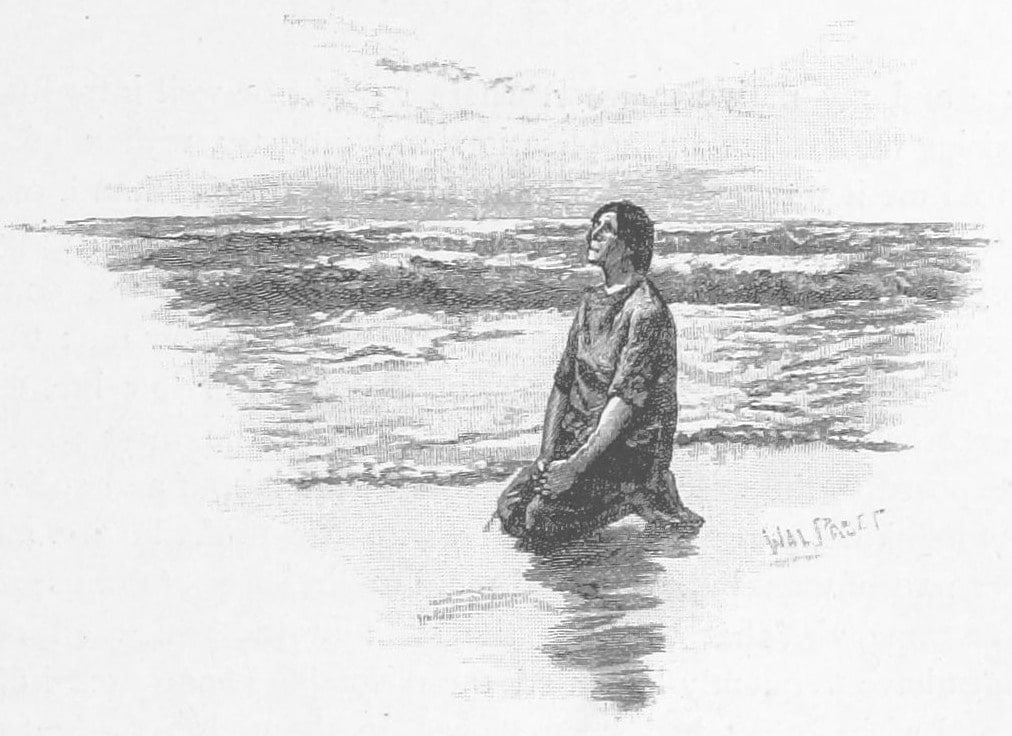
The Life and Strange Surprising Adventures of Robinson Crusoe. With one hundred and twenty original illustrations by Walter Paget. London : Cassell & Co 1896
Temporary Cast-Away
Pretty much every reader ever is coming here to read the castaway story. So, it’s both surprising and disappointing that this is only half the story. The good half. Once Crusoe leaves the island, he doesn’t introspect on what happened while he was gone (everyone who knew him before is conveniently dead and he skips over that in a sentence). He doesn’t really talk about trying to fit back into society after so long alone either. Instead, he’s on about making more money (he got himself declared legally alive again and took charge of a plantation he had established before his fateful voyage). Then, this shipwrecked wretch who claimed to have learned his lesson (which was that his father was right and it was wrong of him to select a life at sea) is immediately at sea again. And nope, don’t expect him to opine on this. Don’t expect resolution. Don’t expect just a little bit of natural fear that maybe he’ll shipwreck again and not be so lucky.
Compassion or Flight?
Crusoe is supposed to be the good guy. He’s not (and there are many instances of this). And I’m not just talking about being a “product of his time” (I’ve got a section for that alone) or being imperfect. I’m talking about a major betrayal.
Eventually, some shipwrecked Spanish sailors land on the island. They never get names, not even the leader. They’re just called Spaniards. Crusoe rescues them from the cannibals and discovers that more shipwrecked sailors are on a nearby island, filled with “friendly” cannibals (Friday’s tribe). Crusoe hatches an elaborate scheme to build a big boat, something he was unable to do himself, and sets his rescued people off on a journey to this island to gather the others, promising that they will all escape together.
But, opportunity knocks, and when a ship with a mutinous crew lands Crusoe gets control of said ship. Instead of just waiting for the people he knows are coming, he and Friday sail off into the sunset, leaving a note telling the people how to survive on the island. Bad, right? It gets worse. When Crusoe reaches England, he’s all about getting that sweet, sweet money he left behind, looking in on his slave-run plantation, and finding a wife. He grows to be an old man, has kids, etc. Never mentions the marooned sailors on his island. Only decades later, when his wife dies and he gets adventurous again, does he charter a ship and return to the island, curious to see if the people he outright abandoned survived. Shockingly, none of them are pissed at him for leaving them and never sending a rescue, and they all continue to worship him and beg to be his loyal subjects. Yeah, right.
Crusoe – A “Product of His Time”
Ok, now that I’ve cover Crusoe’s HUGE betrayal, let’s talk about the “product of his time” stuff. It’s sadly not a surprise, although it is, as always, a disappointment. I’ll only briefly touch on this, because this isn’t that uncommon in these old books, and we all pretty much know what is coming. Admittedly, for his time Crusoe was more “forward thinking” and showed compassion to the cannibals, although its more along the line of the “noble savages” kind of concept. But I guess it’s better than outright hatred? Maybe?
So yeah, Crusoe is a massive racist. The native island people are, of course, all ignorant cannibals. They are all “savages,” but with a little bit of European influence, they can make good slaves. Just . . . Crusoe, did getting abandoned on a desert island teach you nothing?
Crusoe does get closer to God on his island and become a little less ruthless. He shows what he totes as compassion and even has some complicated thoughts about the native people and his right to interfere in their bloody rituals.
Crusoe is relieved to see other Europeans / white men . . . but he still expresses racism to the Spanish people. He also has a lot of hate for Catholics and gets into the entire Catholic vs Protestant thing, although, again, for his time he actually shows a surprising amount of respect and even creates several good Catholic priest characters.
And then . . . then there is the entire scene where Crusoe decides that honor requires him to help his rapist shipmates burn a village and kill men, women, and children, because said village thought rape wasn’t a super nice thing to do. Crusoe does tell off his crew mates for raping the native woman, and later he gets abandoned for harping on the point, but he should have stopped them. He should have said something in the moment, instead of saying, “this is wrong, but oh well, got to make sure my men are safe, since they’re white and all.”
Finally, and here’s another thing that is not in the kid’s version – before Crusoe is shipwrecked – he owned a slave ship. After he rescued himself (and left the poor Spanish sailors), he became an opium dealer in China. So yeah. No wonder that wasn’t in the kid’s version.
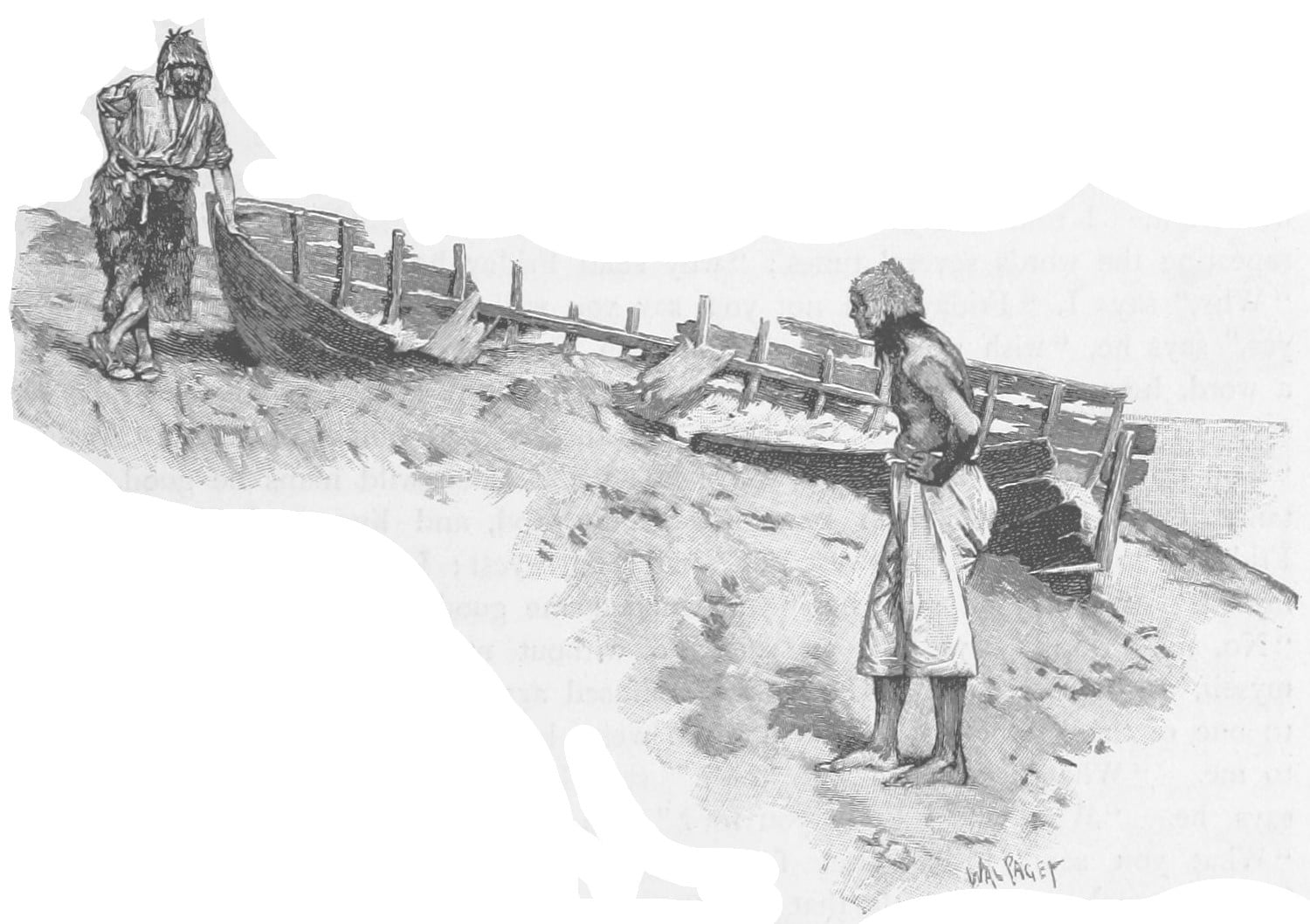
The Life and Strange Surprising Adventures of Robinson Crusoe. With one hundred and twenty original illustrations by Walter Paget. London : Cassell & Co 1896
The Good
The Shipwrecked Time on the Island
There is, however, a reason this work is a classic, and that’s because of the idea it established: the island shipwreck adventure. This part of the story is actually really good. If only it had been the entire story, or the story had just ended once Crusoe left the island. I loved getting to watch him, a man totally unprepared and privileged, try to figure out survival – everything from carving homes out of rock to attempting pottery. This is the adventure and imagination we came for – man against nature and against his own fears.
I also enjoyed the threat of danger that intermittently appears with the cannibals, although let’s face it, it’s not realistic at all. With as much eating of people as these cannibals were doing, they should all have a bad case of Kuru (a disease cannibals get, mostly from eating the brain). Also, I have my suspicions that none of this is grounded in the actual people or culture in what I presume were the West Indies. Still, it’s fiction, so I was willing to let that go.
Friday
As a child, Friday was one of my favorite characters. While reading with adult eyes, I noticed that he is oversimplified (the man is, after all, Crusoe’s obedient slave). Yet, I still enjoyed his character and the chapters where he interacts with Crusoe and explains some of his culture and beliefs. Watching him and Crusoe debate about God and morality and watching Crusoe demystify how guns work and show Friday different “technologies” of the day was fun and put us into the world. The interactions between Crusoe and Friday make a lot of the later portions of Crusoe’s island time exceptionally thought provoking and enjoyable. How would two people from such different cultures and backgrounds interact, especially since language is a barrier? How would such people come together and form a bond and build an understanding? What would they share, and what would they keep secret?
Crusoe’s Relationship With God
I did enjoy the earlier parts of the book, where Crusoe had stopped seeking money and adventure and was more contemplative about the meaning of life, faith, and gratefulness to God (most of which he loses once his luck changes.) The message here, when not interrupted by racism, is actually very moving and beautiful, and if only the message wasn’t interrupted by Crusoe’s actions and his cruelty, it would have made the book transformative. Still, there is a lot of good Christianity in here, hidden behind the error of human ways and Crusoe’s own hypocrisy. I didn’t like him or what he did, but occasionally I liked what he said and his insights and devotion to God.
Of course, as mentioned earlier, Crusoe doesn’t live up to his own standards, and this isn’t done to make a point about the fallibility of humans or how when in luxury we tend to rely less on God than we do when in deprivation. Indeed, the story ends with several long winded, out of place chapters where Crusoe gives his thoughts on life and religion. And these chapters are really hard to take after everything Crusoe has done. Really, you’re going to speak about a relationship with God and goodliness WHEN YOU ABANDONED THE SPANISH SAILORS FOR DECADES? WHEN YOU RAN A SLAVE SHIP AND SOLD OPIUM! WHEN YOU MADE YOUR ISLAND “BEST FRIEND” A SLAVE??
In Conclusion . . .
Ok . . . so my endpoint is this. There is a reason that Robinson Crusoe is a classic book. The execution is decidedly imperfect, in all the ways I mentioned before, but this book started a genre of stories that remain dear to my heart and to many others. For that alone, it’s worth a read to see how the castaway narrative started and to garner the more interesting elements before Crusoe forgets everything he learned and goes seeking wealth and adventure again. For a better cast-away narrative that is still a classic but has fewer problems, I recommend Swiss Family Robinson.
Also – if you’re ever abandoned on a desert island, don’t be a jerk and leave your friends there and never send a rescue ship. This, above all, is the greatest lesson from this book. Childhood love of Crusoe the man, ruined (I ended the book by loathing the hypocritical castaway). Childhood love of the castaway narrative (and, oddly, cannibals) is still healthily intact though.
– Frances Carden
Follow my reviews on Twitter at: https://twitter.com/xombie_mistress
Follow my reviews on Facebook at: https://www.facebook.com/FrancesReviews

- Book Vs Movie: The Shining - April 6, 2020
- Thankful For Great Cozy Mysteries - December 13, 2019
- Cozy Mysteries for a Perfect Fall - October 20, 2019